










With two recent rescues of stranded ice fishermen in Door County and above-freezing high temperatures expected all this week, local and state officials are warning people to take extra precautions if venturing out on the frozen bay or lakes. Last Friday afternoon, a large group of fishermen were stranded and eventually rescued near Snake Island when the ice cracked and separated some 30 feet offshore. One week before that rescue, the Nasewaupee Fire Department airboat brought two anglers safely to shore after strong south winds caused a crack. Department Conservation Warden Chris Kratcha says anglers should always be wary of ice depths and changing wind conditions. He recommends bringing emergency equipment to help you should you fall through the ice.
Kratcha adds that having a plan and informing others of it is essential before leaving the shore to ice fish. A 65-year-old Kewaunee man died last month after falling through the ice on the Kewaunee River. Below is a list of ice fishing safety tips from the Wisconsin DNR.
When Is Ice Safe?
There really is no sure answer, and no such thing as 100 percent safe ice. You cannot judge the strength of ice by one factor like its appearance, age, thickness, temperature or whether the ice is covered with snow. Ice strength is based on a combination of several factors, and they can vary from water body to water body. Ice strength can also vary in different areas of the same body of water.
Know Before You Go
View and download the Know Before You Go Ice Safety Brochure [PDF].
Because ice conditions vary, it is important to know before you go. The DNR does not monitor local ice conditions or the thickness of the ice. Local bait shops, fishing clubs and resorts serve winter anglers every day and often have the most up-to-date information on how thick the ice is on local lakes and rivers, as well as areas that are especially dangerous.
Safety Tips
- Dress warmly in layers.
- Don't go alone. Head out with friends or family. Take a cell phone if available, and make sure someone knows where you are and when you are expected to return.
- Know before you go. Don't travel in areas you are not familiar and don't travel at night or during reduced visibility.
- Avoid inlets, outlets or narrow that may have current that can thin the ice.
- Look for clear ice, which is generally stronger than ice with snow on it or bubbles in it.
- Carry some basic safety gear: ice claws or picks, a cellphone in a waterproof bag or case, a life jacket and length of rope.
What To Do If You Fall Through Ice
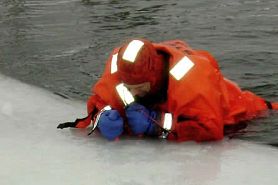
A DNR employee demonstrates the ice self-rescue maneuver.
If you fall through the ice, remain calm and act quickly.
- Do not remove your winter clothing. Heavy clothes can trap air, which can help provide warmth and flotation. This is especially true in a snowmobile suit.
- Go back toward the direction you came. That is probably where you will find the strongest ice – and what lies ahead is unknown.
- Place your hands and arms on the unbroken surface. This is where a pair of nails, sharpened screwdrivers or ice picks are handy in providing the extra traction you need to pull yourself up onto the ice.
- Kick your feet and dig in your ice picks to work your way back onto the solid ice. If your clothes have trapped a lot of water, you may have to lift yourself partially out of the water on your elbows to let the water drain before starting forward.
- Once back on the ice, don't try to stand up. Lie flat until you are completely out of the water, then roll away from the hole to keep your weight spread out. This may help prevent you from breaking through again.
- Get to a warm, dry, sheltered area and warm yourself up immediately. In moderate to severe cases of cold-water hypothermia, you must seek medical attention. Cold blood trapped in your extremities can come rushing back to your heart after you begin to warm up. The shock of the chilled blood may cause ventricular fibrillation leading to a heart attack and death!
Instructions For Making Ice Claws
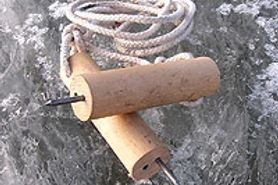
- Get two 4" pieces of wooden doweling the size of a broom handle or a little larger. Whatever material you select, it should float in case you drop the claws while struggling.
- Drive a stout nail into one end of each dowel. This should be a hardened 16 penny or larger concrete nail.
- Use a file to sharpen the nail heads to a point.
- Drill a hole into the dowels (in the end opposite the nail) and tie a length of strong cord through the hole so a pick is on each end "jump-rope" fashion. You may also drill a hole in the ends alongside the nails so the nail on the other pick can nest in the hole, keeping both points covered. Keep the picks in your pocket for quick emergency access if you or a companion do break through.

