







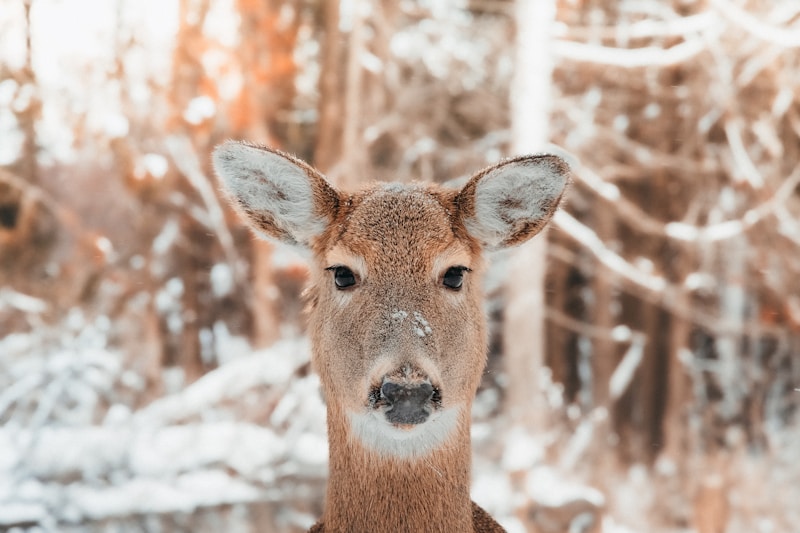
As the 2025 deer hunting season wraps up in Door and Kewaunee Counties, wildlife officials are reminding hunters and landowners that chronic wasting disease, a fatal neurological disease affecting deer, elk, moose, and caribou, remains a serious concern in Wisconsin’s deer herd. CWD is caused by misfolded proteins called prions and is always fatal once an animal becomes infected.
Under Wisconsin law, the Department of Natural Resources (DNR) must impose baiting and feeding bans in any county where CWD has been confirmed in wild or captive deer, as well as in adjoining counties within 10 miles of a confirmed case.
According to state wildlife experts and regulatory maps, Door and Kewaunee Counties are not currently listed among counties with mandated baiting and feeding bans related to recent CWD detections, meaning those prohibitions are not in effect here at this time.
However, DNR Wildlife Habitat Herd Health Specialist Erin Larson continues to caution that baiting or feeding deer, practices that artificially congregate animals, can accelerate the spread of CWD by increasing contact between infected and healthy deer. “When deer gather unnaturally around feed or bait sites, it creates the perfect conditions for CWD to move through a herd,” said Larson. “These CWD deer may look healthy, but are spreading the disease to healthy deer”, she added.
Larson encourages hunters to have harvested deer tested for CWD, especially in areas where the disease has been detected elsewhere in the state. Free testing through the DNR helps wildlife managers monitor the disease’s distribution and better understand how populations are affected.
Even without local bans, Larson stresses that reducing artificial gathering of deer, including discontinuing supplemental feeding, remains one of the most effective ways to slow the spread of this always-fatal disease as winter gives way to spring.

