









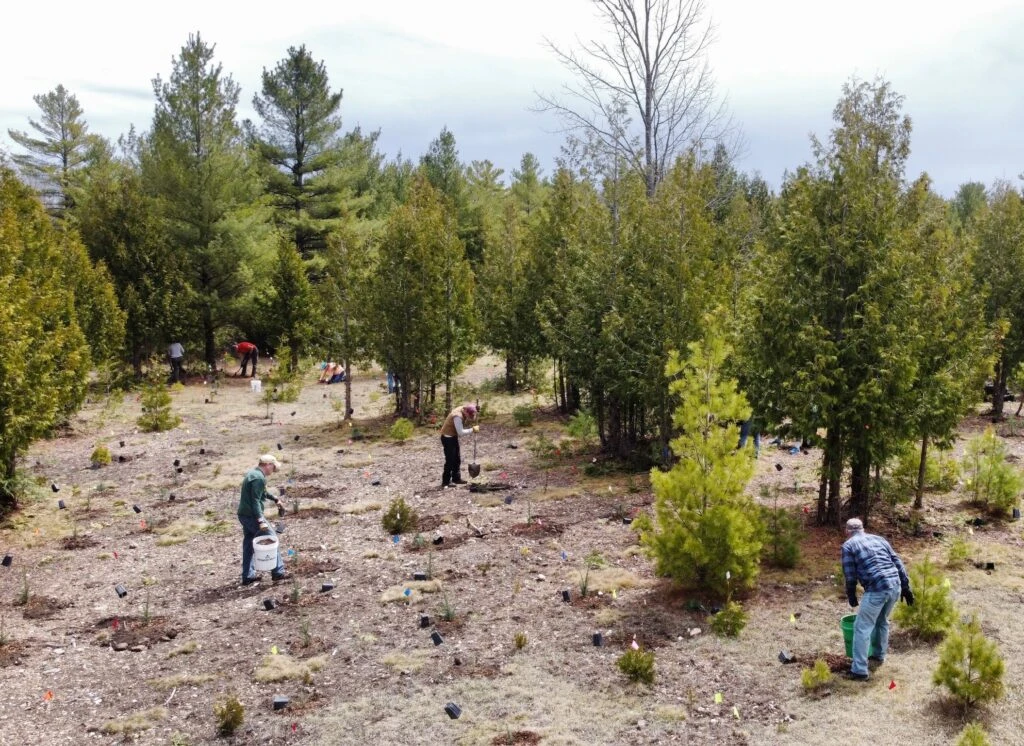
Door County’s forests are showing the scars of a turbulent year, as severe summer storms and long-term ecological stress continue to take a toll on the peninsula’s trees. But amid the cleanup and concern, researchers and conservationists say recovery efforts tied to the Boreal Climate Survivability Project are offering both insight and hope for the future of the region’s woodlands.
In early August, a series of powerful storms swept across Door County, toppling trees, closing roads, and disrupting power from Rowley’s Bay to Sturgeon Bay. Officials confirmed at least one tornado near Peninsula State Park, while high winds caused widespread damage in both developed areas and natural landscapes. For ecosystems already under pressure from invasive species, changing climate patterns, and aging tree stands, the storms added another layer of stress.
“The storms were dramatic, but they’re also part of a bigger picture,” said Victoria Holderer, Applied Research Ecologist at The Ridges Sanctuary. “We’re seeing more frequent and intense weather events, and that reality is reshaping how our forests function and which species are able to persist.”
That shifting reality is at the heart of the Boreal Climate Survivability Project, a collaborative effort led by The Ridges Sanctuary and regional partners. The project focuses on planting and monitoring thousands of trees across different habitats, including state natural areas such as the Baileys Harbor Boreal Forest. The goal is to better understand which boreal and near-boreal species can survive and adapt as conditions change.
“This project isn’t just about planting trees,” Holderer explained. “It’s about learning which species can handle warmer temperatures, fluctuating moisture, and storm stress, so we can make informed decisions about future forest management.”
An additional challenge facing forest recovery in Door County is the region’s high deer population, which places intense pressure on young trees. Deer browsing can significantly reduce sapling survival, particularly for species already stressed by changing climate conditions. “Deer tend to preferentially browse the same species we’re trying hardest to protect,” said Holderer. “When saplings are repeatedly eaten back year after year, they never get the chance to grow beyond that vulnerable stage, which can dramatically alter future forest composition and limit the success of restoration and research efforts like the Boreal Climate Survivability Project.”
As seasons change and unpredictable weather moves across the peninsula, the Boreal Climate Survivability Project stands as a forward-looking response, one rooted in science, adaptation, and a long-term commitment to Door County’s natural heritage.

