









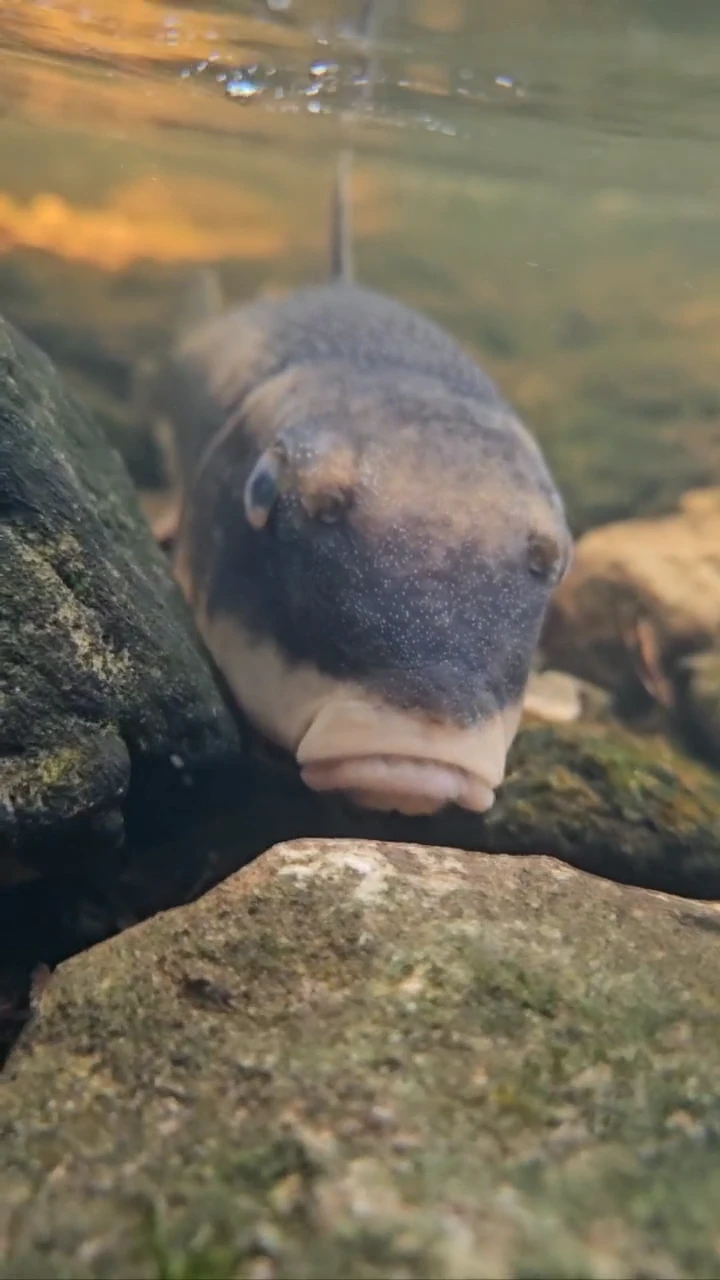
Suckers are among the most abundant fish species in the Great Lakes region. Sometimes referred to as the “wildebeests of the Great Lakes,” they undertake large spring migrations from the lakes into tributary streams to spawn, creating one of the region’s most visible seasonal fish movements, the Sucker Run.
“Door County has this awesome phenomenon that happens this time of year, and it’s the Sucker Run,” said Samantha Koyen, executive director of Crossroads at Big Creek.
Like many Great Lakes fish species, they survive spawning and return to the same streams in subsequent years. White suckers from the Kewaunee River have been documented at up to 24 years of age, with most beginning reproduction at three to four years old.
During spawning, suckers release eggs and waste products that deliver a pulse of nutrients into stream ecosystems. This influx occurs as waters warm in spring and aquatic systems become more biologically active, helping stimulate algal growth and increasing aquatic insect production. Those insects, serve as an important food source for trout and other fish species, linking sucker migrations to broader food web productivity.
“These amazing fish are so important to the ecology of the Great Lakes and our region, and are often overlooked and underappreciated,” Koyen said.
“What we see at Crossroads is that the community loves to come and see them,” Koyen said. “The Sucker Run is great to come and see, they’re plentiful, they are not skittish at all, and some can actually be handled.”
The spring sucker run in Door County typically occurs from late March through early May, peaking in early-to-mid April when water temperatures reach approximately 45 degrees. The exact timing varies by year based on ice melt and weather conditions. Early and late in the day are best for viewing the spawning.
For more information, please visit the Crossroads at Big Creek website.

