









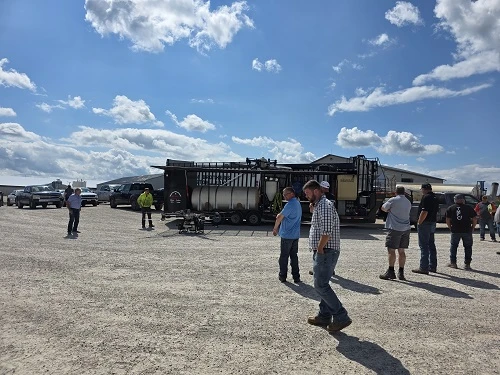
The story behind treating fields with the nutrients, pesticides and herbicides needed to keep crops healthy and growing goes well beyond the big equipment you see entering the field. Applicators took center stage during Wednesday’s Peninsula Pride Farms Summer Field Day and Member Picnic, highlighting the little things they do before heading out into the fields. Dave LaCrosse, Adam Barta, Ben Heim, Jeff Kohnle, Jessy Hill and Trevor Balthazor explained how the GPS maps they rely on and the data they collect during previous applications help guide subsequent trips to the field. Barta pointed out that the technology has changed immensely over the years, allowing applicators to customize their approach instead of relying on a one-size-fits-all strategy. Attendees were then given an up-close look at the technology available, ranging from small drones to large sprayers.
Peninsula Pride Farms President Duane Ducat says the technology keeps improving, allowing farmers to use fewer chemicals on their fields while having a more positive impact.
The session comes at a time when input costs continue to rise because of a variety of factors. According to the American Farm Bureau Federation, cost-of-production estimates raised fertilizer expense projections for 2026. Despite potential relief next year for fuel and fertilizer prices, higher prices for seed, chemicals, repairs, labor, machinery and cash rents are expected to increase production costs in 2027.

