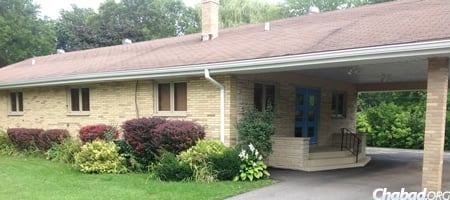
You will soon enjoy five new outdoor exhibits at the Belgian Heritage Center after the Green Bay Packers Foundation awarded the organization a $3,000 grant. Belgian Heritage Center Board Member Bill Chaudior says the grant will go a long way in telling the story and features of the buildings on the Belgian Heritage Center campus. He says the Packers’ history has many connections with the Belgian community in the area.
The Belgian Heritage Center has a Green Bay Packer exhibit that has been displayed inside for the past few years, explaining all the connections of past players and coaches with the Belgian Community. The new outdoor exhibits will provide all-day, year-round insight into local history for visitors stopping after hours or during the offseason.
(Press Release)
The Belgian Heritage Center is especially pleased to be recognized by the Green Bay
Packer Foundation because of the many connections between the Packers and the
Belgian community. Curly Lambeau was known as the “Bellicose Belgian” because of
his roots. His grandparents all immigrated from Belgium and many of the early players
had Belgian roots. Others of Belgian ancestry made significant contributions to the
Packers. Frank John Jonet (1883-1951) from Tonet was an accountant with the Packers
and guided the reorganized Packers when they emerged from receivership in early
1935. Judge Robert James Parins (1918-2017), was born in Namur, Wisconsin, and
became the first full-time Green Bay Packers president in 1982. Judge Parins served as
a member of the Packers Board of Directors for 28 years.

The Belgian Roots of the Green Bay Packers
by Lou Ann M. Novak
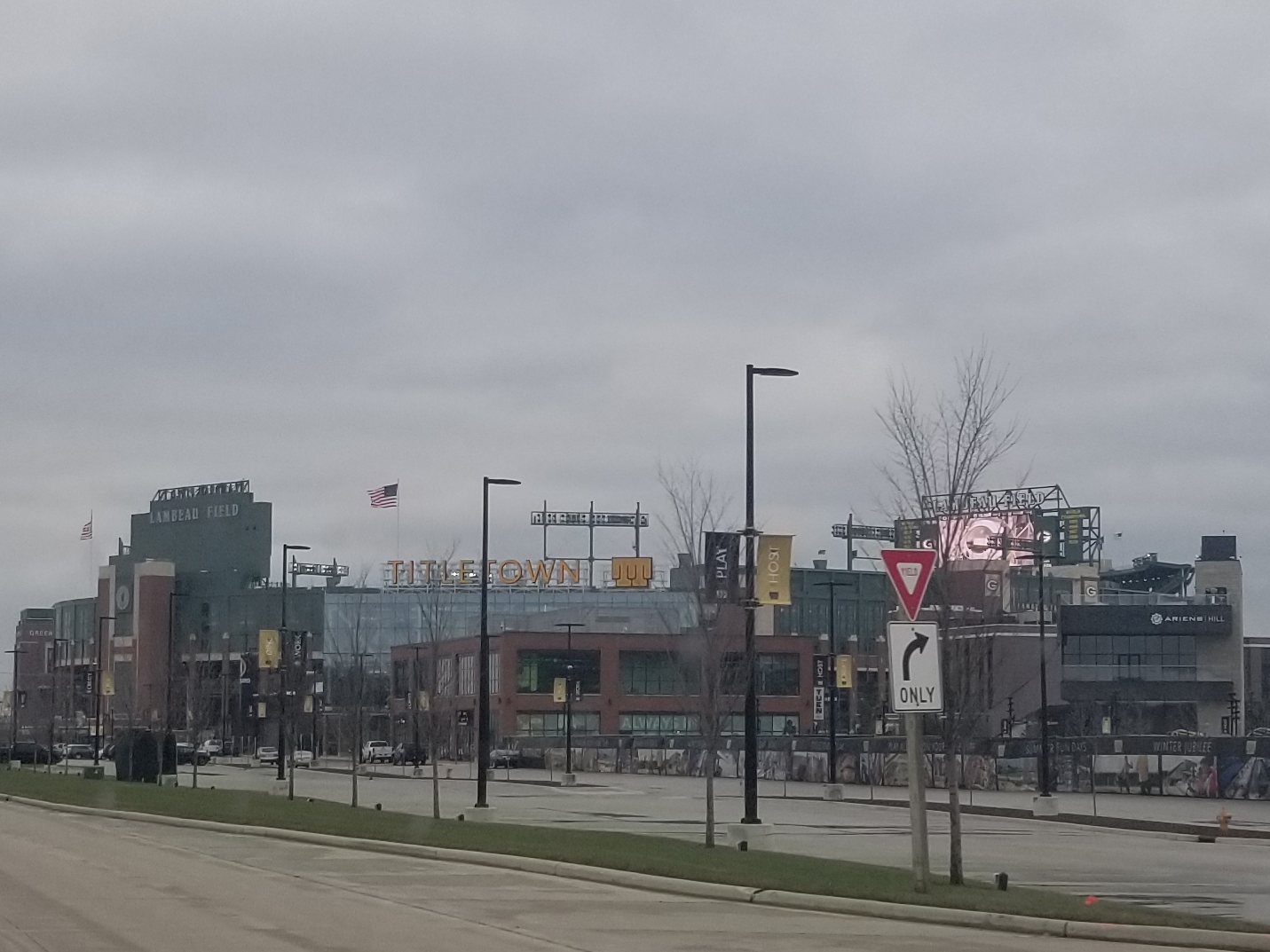
As I gaze at Lambeau Field, a question nags me, “If not for Belgian immigrants would there be a Green Bay Packers football team today?”
To start, just take a look at three members of the original 1919 Packers team: “Curly” Lambeau, John Des Jardins and Wally Ladrow.
Earl Louis “Curly” Lambeau (1898-1964), co-founder of the Green Bay Packers, was born at Green Bay, Wisconsin, to Marcelin Lambeau and Mary Sara LaTour Lambeau. All four of his grandparents had emigrated from Belgium.
Lambeau was an outstanding athlete at Green Bay East High School and played halfback all four years of his attendance. Under Lambeau's class picture in the 1917 East High annual, it reads: "When I get thru with athletics, I'm going out and conquer the rest of the world."
After high school, Lambeau attended the University of Notre Dame to play for coach Knute Rockne on the Notre Dame Fighting Irish varsity squad. However, a severe case of tonsillitis forced him to return to Green Bay. After a long recovery from his illness, Lambeau went to work as a shipping clerk at the Indian Packing Company for $250 a month.
Rather than give up the game he loved, Lambeau joined George Whitney Calhoun of the Green Bay Press-Gazette to start a local football team. Lambeau’s employer, the Indian Packing Company, agreed to sponsor the team and pay for its uniforms and equipment. The Green Bay Packers were officially organized on August 11, 1919 in the Press-Gazette office.
Lambeau spent over 30 years playing and coaching the Packers football team, leading the Packers to a stunning 200 wins and six NFL Championships. The home stadium in Green Bay is named Lambeau Field in his honor.
John Arnold Des Jardins (1895-1969) was born in Champion, Wisconsin, to Alphonse Dujardin and Alice Petiniot Dujardin. All four of his grandparents had emigrated from Belgium.
Des Jardins, like Lambeau, attended Green Bay East High. One day Lambeau saw Des Jardins getting ready to ride his bike 10 miles and Lambeau asked him to try out for football because he was tough and strong. That was the first time Des Jardins had heard of the game.
Des Jardins started for East for two years, but became ineligible because of his age during his senior year. He once broke Lambeau’s leg at East High in practice. At the time, the East High Hilltoppers were undefeated and had one game to play. Unfortunately, they lost the game and the championship without Lambeau.
Des Jardins played center/guard on the original Packers team Lambeau hand selected in 1919, playing on four of the final five Packers games during that first season. Des Jardins died August 11, 1969, on the 50th birthday of the Packers.
Walter “Wally” Paul Ladrow (1895-1974), born in Brookside, Wisconsin, was the son of Jean Baptiste “John” Laduron, who had come from Meux, Belgium with his parents (Maximilien Laduron and Anne Josephe Herbignat) at the age of three. Ladrow’s mother, Adele Chartrand Laduron emigrated from Canada in 1866.
Ladrow also played football at Green Bay East High School. In addition, he played fullback for the Hillsides, a town team representing the Astor Park area of Green Bay. Ladrow was temporarily sidelined by a broken collarbone in 1915.
When the call went out that Lambeau was organizing a “best of the best” city team, Ladrow was healed and eager to play. Ladrow, a running back, was on the Packers roster during the first two seasons, 1919 and 1920.
In 1921, the Green Bay City Directory lists Ladrow as a foreman at the Indian (soon to be Acme) Packing Company. Ladrow died July 22, 1974. He was the final surviving member of the Packers inaugural 1919 team.
Through the years other people of Belgian ancestry made significant contributions to the Green Bay Packers. There was Frank John Jonet (1883-1951), who was born in Tonet, Wisconsin. Jonet was involved as an accountant with the Packers from the very beginning and guided the reorganized Packers when they emerged from receivership in early 1935, saving the team for history.
In addition, there was Judge Robert James Parins (1918-2017), who was born in Namur, Wisconsin, and became the first full-time Green Bay Packers president in 1982. Judge Parins served as a member of the Packers Board of Directors for 28 years.
Both Jonet and Parins have been inducted into the Packers Hall of Fame.
Lambeau. Des Jardins. Ladrow. Jonet. Parins. All Belgian descendants who are part of Green Bay Packers history. Clearly, without these Belgian descendants, a small town in the Midwest might never have earned the nickname “Titletown.”




















































.jpg)


